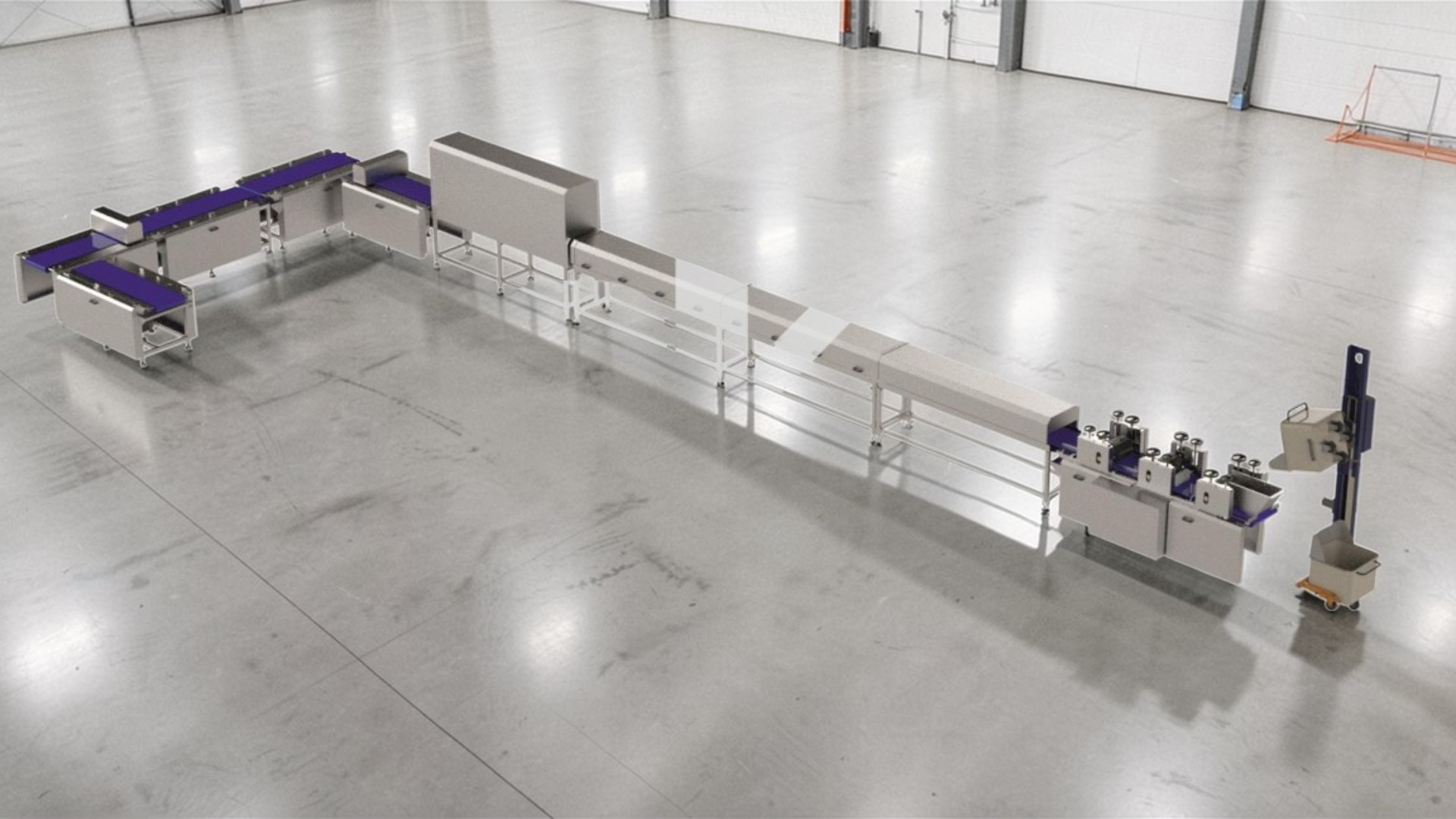
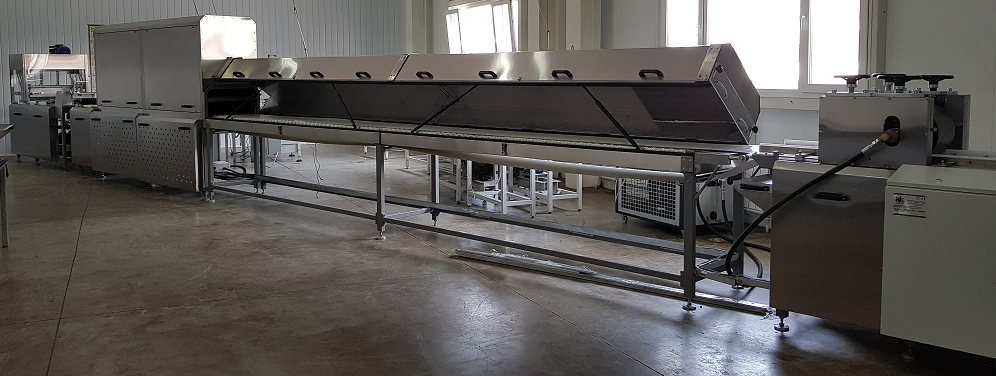
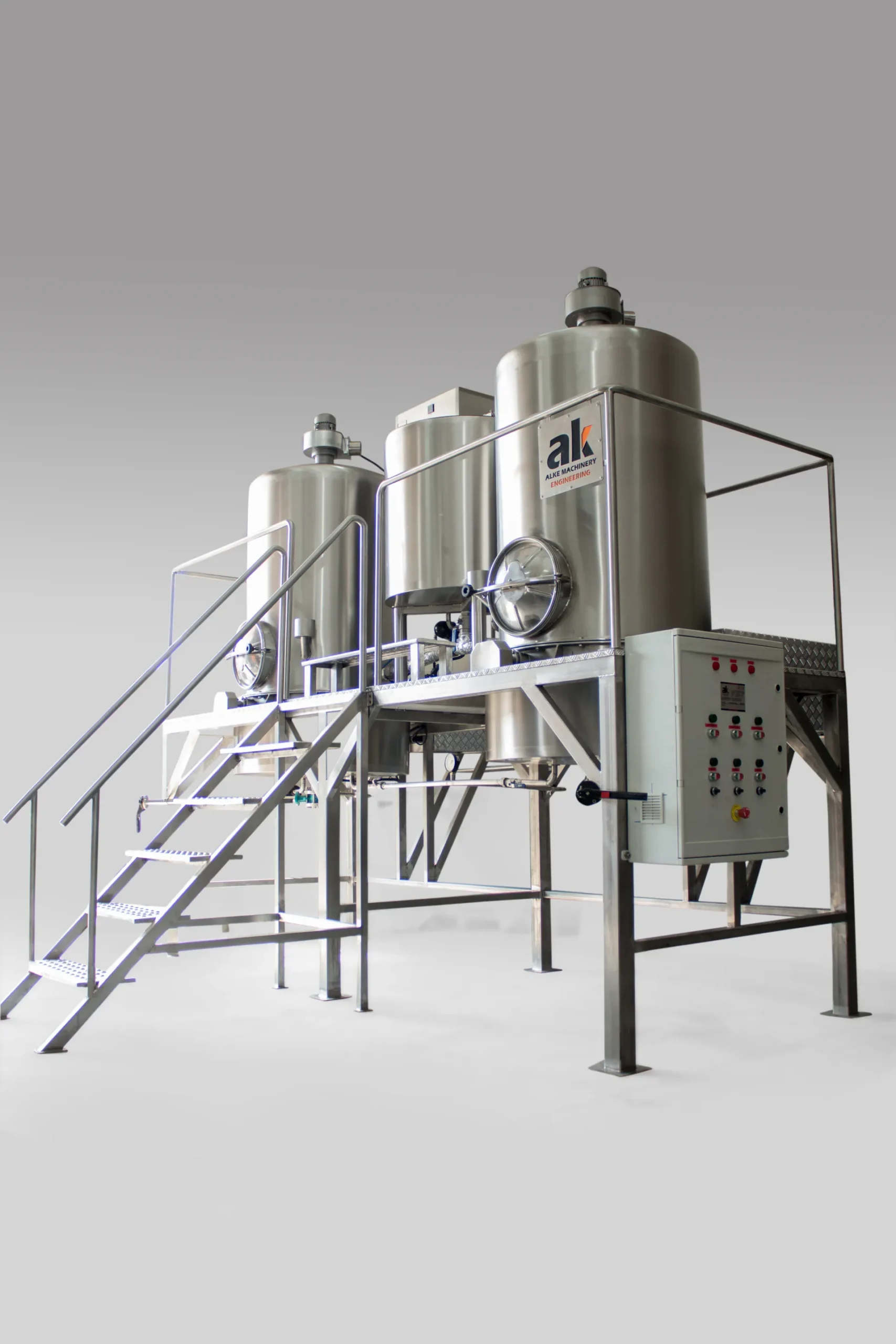
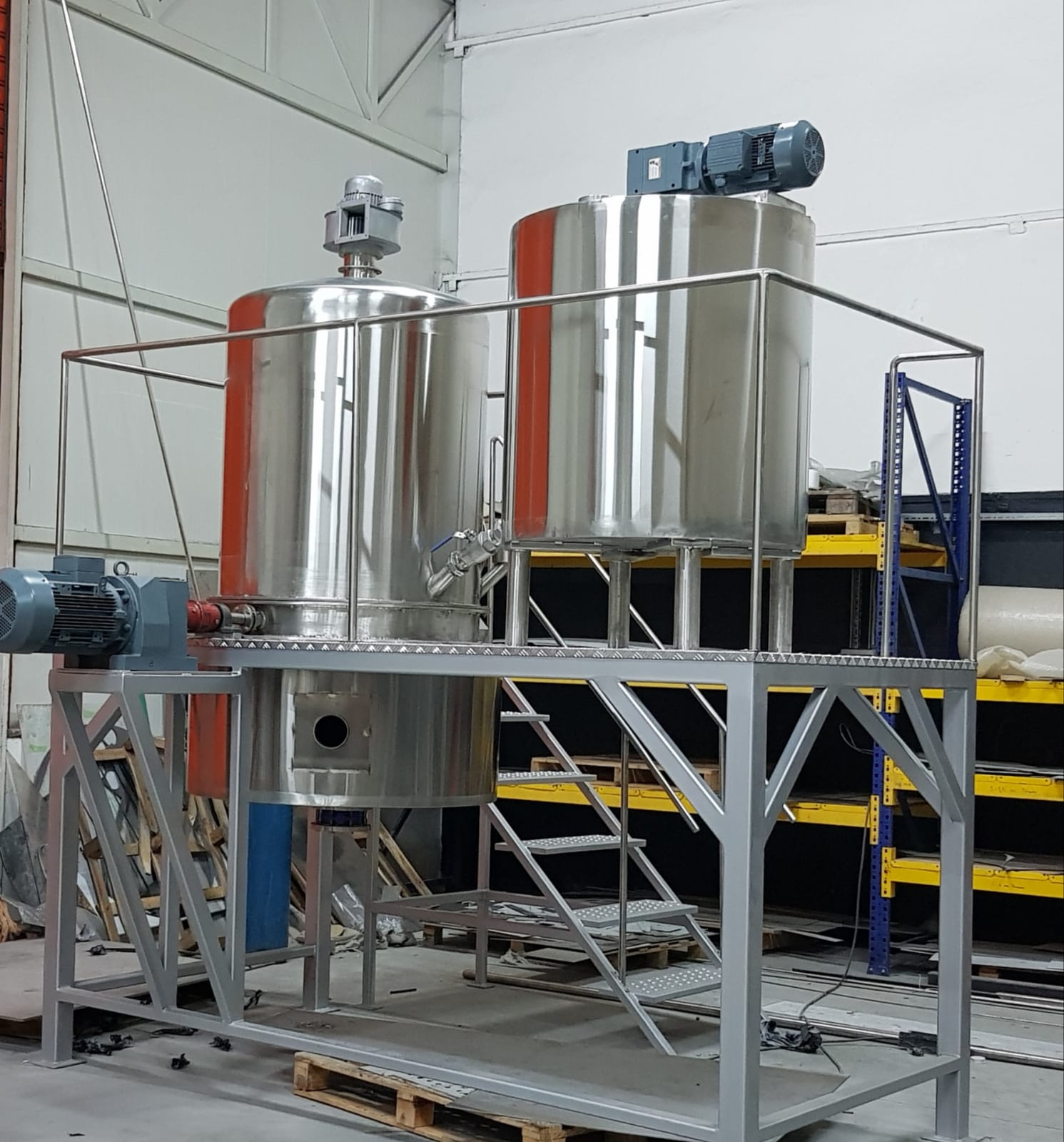
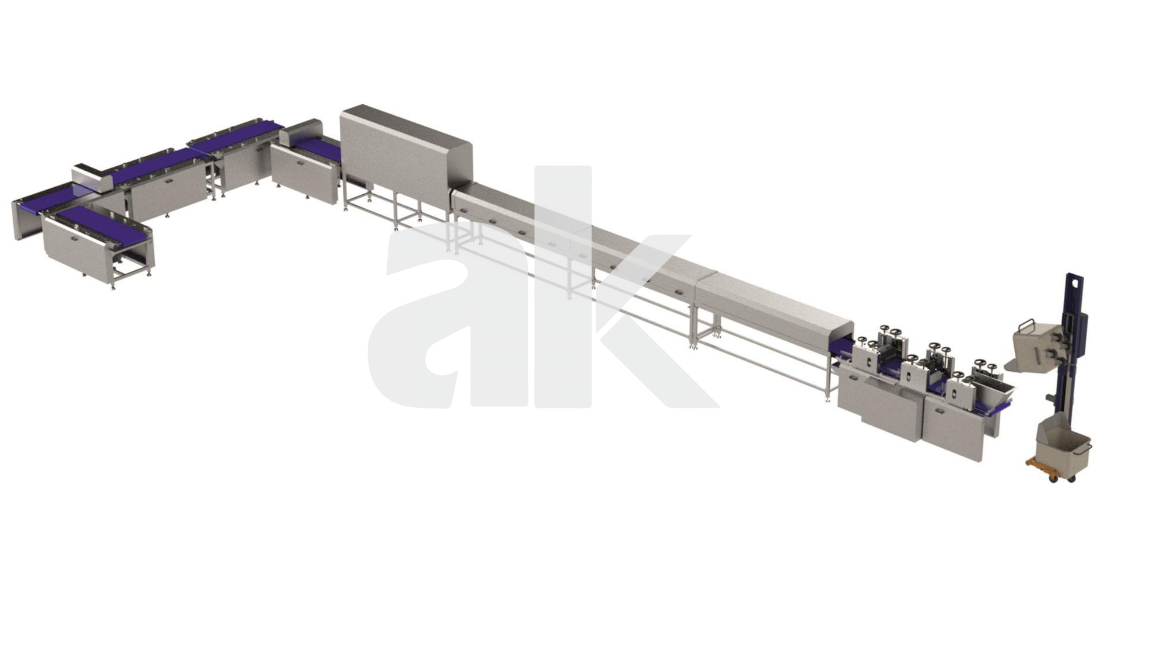
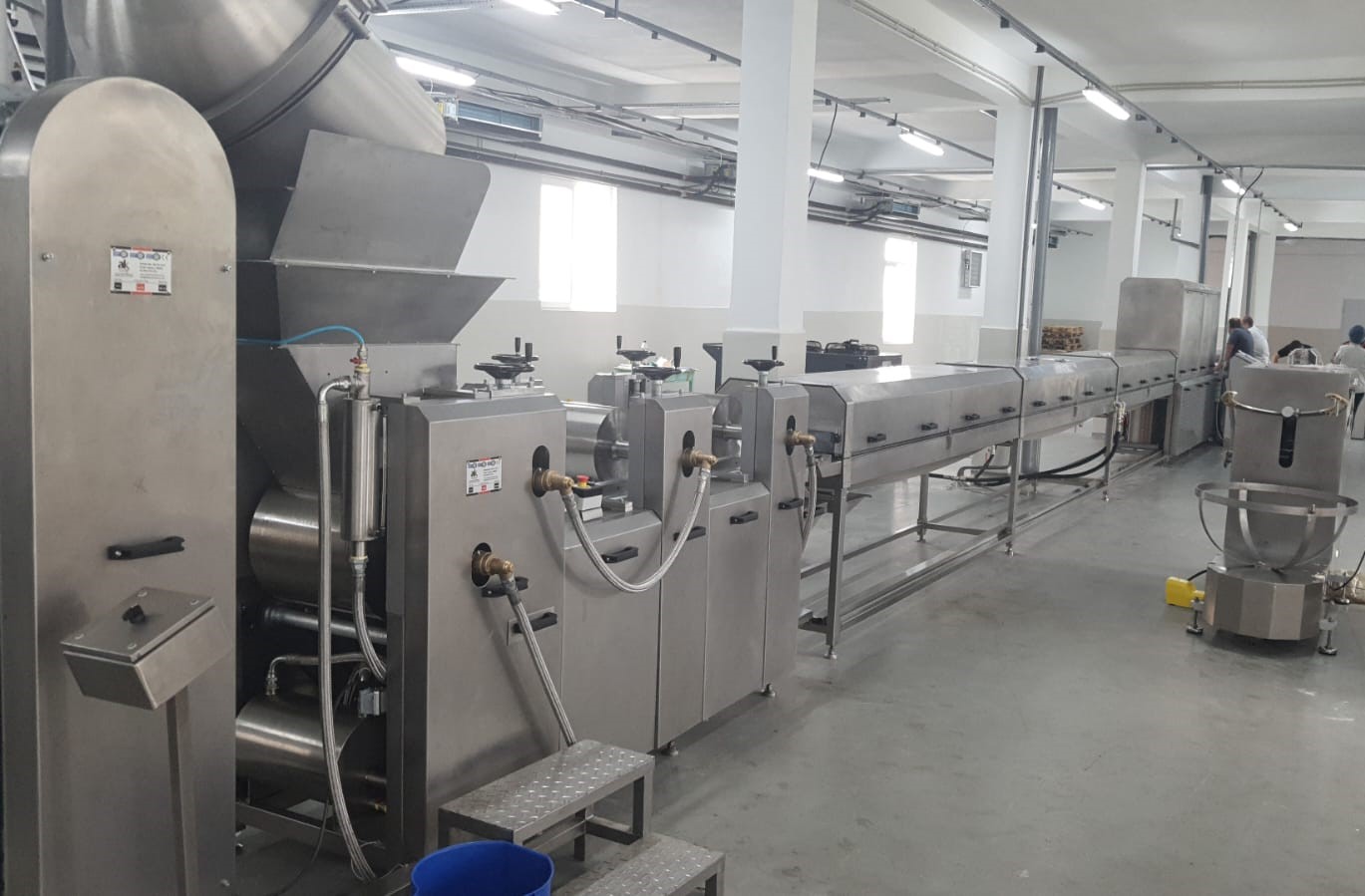
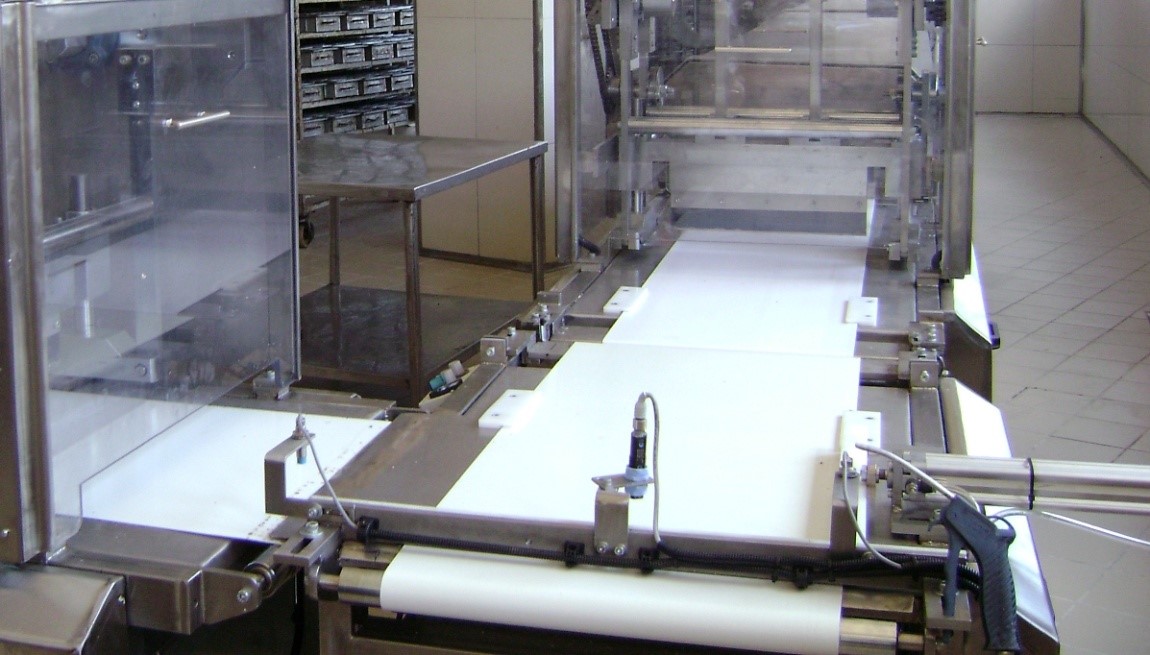
The Halva Bar Production Line is specially designed for industrial production of sesame-based halva bars and portioned halva snacks with consistent texture, controlled cutting accuracy, and hygienic processing conditions.
Products You Can Manufacture
Classic sesame halva bars
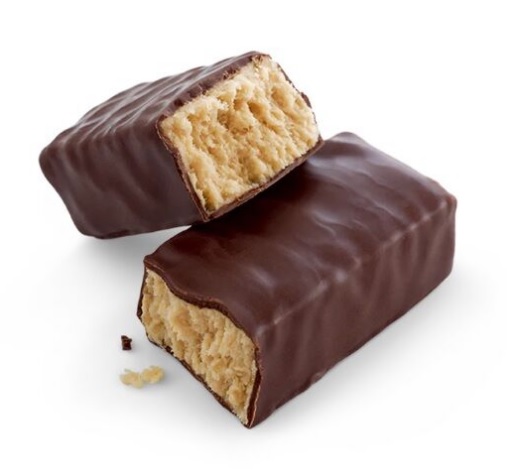
Chocolate-coated halva bars
Pistachio, almond, or cocoa halva bars
Layered halva snack bars
Functional or protein-enriched halva products
Mini portion halva snacks
Individually wrapped retail halva bars
Raw Materials Supported
Tahini (sesame paste)
Sugar and glucose syrup
Cocoa powder or chocolate
Pistachio, almond, peanut, or mixed nuts
Vegetable fats
Natural flavors and aromas
Functional or nutritional additives
Production Process
1. Tahini Preparation
Sesame paste (tahini) is prepared and standardized.
2. Sugar Syrup Cooking
Sugar and glucose syrup are cooked to the required temperature and consistency.
3. Mixing & Fiber Formation
Syrup and tahini are blended under controlled mixing to create the characteristic halva structure.
4. Ingredient Addition
Nuts, cocoa, or flavor ingredients are added evenly.
5. Forming & Slab Shaping
The halva mass is spread or formed into continuous sheets.
6. Cooling & Stabilization
Product structure stabilizes under controlled cooling conditions.
7. Cutting & Portioning
Automatic cutters shape halva into bar formats.
8. Optional Chocolate Enrobing
Bars can be coated with chocolate or compound coating.
9. Packaging Integration
Ready bars are transferred to flow-pack packaging systems.